


Get to Know Catesa Farms
About Catesa Farms and George McDonald

Started by his great-grandfather in 1927, the McDonald family legacy of caring for the land, the community, and the environment has grown with the operation, which now spans five Tennessee counties.
“My farm is a family operation,” says George, who farms alongside his daughter Sarah, mother Linda, and wife Susan. The farm also enlists an extended family of nine full-time team members and around 25 seasonal workers collaborating to grow corn, soybeans, wheat, strawberries, and watermelons.
Environmental Impact

George makes it clear where he stands in a world increasingly focused on sustainability.
In his view, sustainability isn’t just about trends or buzzwords – it’s about tangible actions. By utilizing GPS technology paired with soil sampling, Catesa Farms manages nutrients in the soil and fertilizer use on the farm to maximize the productivity of their land and ensure they are accountable for their impact on the environment.
Catesa Farms also practices no-till farming to leave the soil undisturbed, protecting their land from erosion.

Throughout the farm, the McDonald family has also created pollinator habits to add value to the environment and ecosystem.
While these conservation practices demonstrate the McDonald family’s commitment to sustainability, perhaps it’s their main crop, corn, delivering the greatest benefit.
The variety they grow – dent corn – is not the sweet variant you’ll find in your grocer’s case or a roadside farm stand. Dent corn is a high-starch corn used predominantly as livestock feed and for distillation purposes, including making ethanol or whiskey.
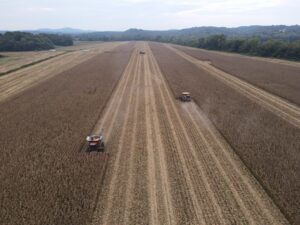
Much of the corn grown on Catesa Farms is used to create ethanol, one of our nation’s best renewable energy resources. This eco-friendly fuel is safe for most gasoline-powered vehicles built after 2000. Up to 10% ethanol is already included in most gasoline you buy at the pump today. Other blends with additional ethanol are available at a reduced cost compared to standard gasoline.
Not only is corn ethanol reducing our reliance on non-renewable fuels, but it’s also grown and processed locally, supporting the economy of Tennessee.
Source: (Fueled by Corn: Meet a Corn Farmer: George McDonald)